
By: Dr. Catherine Son
Cars as a pastime have historically played an important part in Australia’s cultural and community landscape.
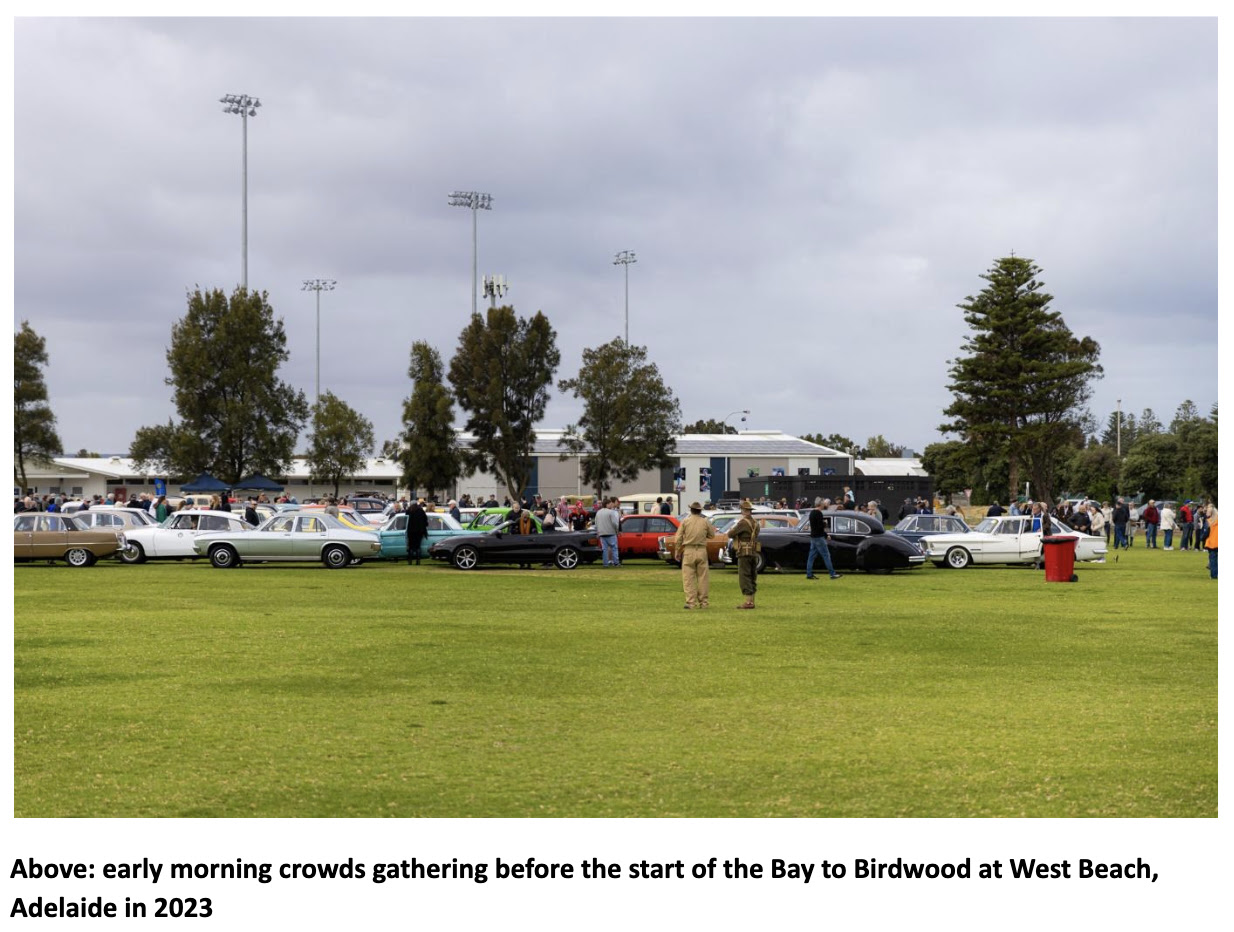
Around the country, almost every weekend, thousands of participants and spectators flock to community events such as Cars and Coffee-style events, club car runs, and large organized car shows.
These activities provide both an economic and social benefit to their communities, with the 2024 Automotive Heritage Economic Impact Survey finding that the average historic vehicle owner in Australia spends approximately $10 000 per year on their car.
In addition to strong grass-roots and community support for cars as a hobby, classic cars are also increasingly seen as a valuable investment proposition. According to Knight Frank’s 2024 Wealth Report Attitudes Survey, cars are the number one passion investment for some of Australia’s most wealthy individuals, with 61% prioritizing cars as their top passion investment.
News media are integral to shaping public opinion about what constitutes social and cultural value. Yet, despite the immense cultural, economic and social contributions that car enthusiasts make to the fabric of Australian community life, analysis reveals that news media pays little attention to their identities, practices, and efforts.
This research set out to examine how car enthusiasts have been portrayed by mainstream Australian news media in recent years. Using the NewsBank database to search for news stories featuring the search terms “car enthusiasts”, a total of 172 unique news articles were identified across seven major metropolitan daily publications: the Advertiser (Adelaide), Age, Courier Mail, Daily Telegraph, Herald Sun, Mercury and Sydney Morning Herald.
These news stories were then coded using a framing analysis technique. Framing theory seeks to analyze which information is included and emphasized in news stories, and which aspects of an issue are minimized or absent.
From this analysis, five key themes were identified that were commonly used to portray car enthusiasts in these reports.
|
Theme
|
Number of articles
|
Total percentage of all articles
|
|
Wealth/status
|
78
|
45%
|
|
Events
|
42
|
24%
|
|
Car enthusiasts
|
27
|
16%
|
|
Criminality
|
14
|
8%
|
|
Car advice
|
11
|
6%
|
Table 1: Framing analysis of Australian news reports pertaining to “car enthusiasts” 2020 – 2025
What do these themes reveal about how car enthusiasts are portrayed by Australian news media?
A very large proportion – 69% – of analyzed news reports related to the status, prestige, entertainment, or economic value of cars and car enthusiasts in some way, as evidenced by the combination of wealth/status, and events being the two predominant themes that emerged from these reports.
The 45% of news reports that conveyed car enthusiasts as indicative of wealth and/or status did so through real estate features that aimed to appeal to car enthusiasts with large and luxury garage spaces, and reports regarding the auction of extremely valuable cars and number plates. Within the wealth/status theme, being a car enthusiast was portrayed as a signifier of wealth or status, and cars were framed as desirable assets based on their monetary value.
A further 24% of articles presented cars as culturally and socially valuable, by highlighting events such as rallies, motor racing events, and car shows. Media attention towards such events demonstrates some recognition of the value of cars as a drawcard for tourism and events, and of the entertainment value of these events. These reports also showed that car enthusiasts are often called upon to display their cars for entertainment and to attract visitors, and also to attract support and raise money for charitable causes. Hence, it appears that charities and the broader community not only appreciate but rely on the good will of car enthusiasts and owners of classic cars to promote and support causes.
Analysis also shows that news media generally seem to do a good job of not conflating car enthusiasts with hooning or dangerous behavior, or other sorts of criminality. While a number of articles did discuss car enthusiasts as being involved in dangerous and criminal activities such as racing, hooning and causing disruption, these were a relatively small overall proportion of news reports examined (8%).
The smallest number of articles (6%) were columns providing car advice, either answering reader questions about cars, or giving market updates about the latest cars. This is likely due to the popularity of online forums, dedicated websites and social media pages devoted to providing advice about car maintenance and purchases, and reflects the waning role that mainstream news media plays in providing advice to the public generally in the digital age.
Insignificant or absent – car enthusiasts’ identities, practices and efforts
The key element missing or minimized in the analyzed reports, however, was a spotlight or emphasis on the car enthusiasts themselves. Just 16% of all articles represented car enthusiasts as the primary focus of reports. These included a small number of profiles of car enthusiasts who have a public profile, such as former football players and former models, or authors of the reports declaring themselves to be car enthusiasts. Although there were fewer stories framed as ‘criminality’ or ‘car advice’ than those adopting the car enthusiasts frame, it is arguable that news reports about car enthusiasts should be expected to feature much greater emphasis on the enthusiasts themselves.
The lack of representation of car enthusiasts’ identities, practices and efforts, and as individuals, by news media is revealing. On the one hand, there is an assumption that car enthusiasts are a valuable audience, conveyed through appeals to them in real estate features, and the promotion of events involving car enthusiasts. Yet, voices of actual car enthusiasts in these stories are few and far between.
In particular, there is limited representation of younger car enthusiasts, who may have less financial and cultural capital than the older and wealthier luxury-home buying car enthusiasts that are frequently targeted in high-end real estate features.
This elusive representation of car enthusiasts’ identities by Australian news media also aligns with Alam’s (2020, p. 64) observations that British mainstream television programs such as Top Gear ‘ … present a sanitized, stripped down and appropriately refined, and limited, rendering of car culture, including how and why the car is used, lived with and appreciated’. By extension, Alam (2020, p. 64) argues, ‘ … some class cultures become invalidated through hyper-visibility or, conversely, through their absence’.
Although this analysis has shown that classic cars and car-related events are generally held in high regard by Australian news media, representations of car enthusiasts remain minimal and one-dimensional. News reports analyzed here may not have demonstrated the ‘invalidation’ of class cultures that Alam (2020) speaks of, yet nevertheless there is room for improvement when it comes to platforming and highlighting the contributions of car enthusiasts themselves. More profiles of car enthusiasts would be valuable, to get a better picture of the contributions that these enthusiasts make to their local communities, and the economy, given the substantial outlay that many enthusiasts spend in the pursuit of their hobbies.
It is important to note that this research specifically searched for stories about “car enthusiasts”, in order to capture stories with a more positive angle beyond stereotypes of car enthusiasts as being involved in “hooning”, or as “rev heads”.
Hence, while this research has identified that car enthusiasts are generally represented by news media in a positive light, these findings may not represent depictions of broader car culture and motoring activities by news media, as pejorative terms that are also used to refer to car enthusiasts and those who have chosen cars as a hobby, have been excluded here. More research is needed into how car cultures and cars as a hobby are portrayed in news media reports, and whether Alam’s (2020) contention regarding the invalidation of class cultures in Britain also holds true in the Australian news media context.
Cars have historically been an integral part of Australia’s cultural and social fabric, and car enthusiasts are often called upon to display or contribute their vehicles for a range of community and charitable causes. Through endeavors such as these, as well as many more, the efforts of car enthusiasts around the country contribute significantly both economically and socially.
Current news media representations of car enthusiasts tend to focus on the monetary value of vehicles and status associated with owning a classic car, but provide little insights into the social and cultural value that these enthusiasts contribute to their communities as individuals.
Greater news media attention towards the identities, efforts and practices of car enthusiasts is warranted, to appropriately recognize the social and cultural value that such efforts bring to communities nationwide.
References
- Alam, Y. (2018). Automatic transmission: ethnicity, racialization and the car. Identities, 25(3), 284-301. https://doi.org/10.1080/
1070289X.2016.1232197. - Automotive Heritage Foundation (2024). Automotive Heritage Economic Impact Survey. Australian Motor Heritage Foundation. Retrieved 25 February from https://motorheritage.org.au/
economic-value-study-of- australias-historic-vehicle- sector/. - Knight Frank (2024). Art leads Knight Frank’s Luxury Investment Index with prices rising 11% in 2023 Knight Frank. Retrieved 25 February from https://www.knightfrank.com.
au/blog/2024/04/04/art-leads- knight-franks-luxury- investment-index-with-prices- rising-11-in-2023. - Dr. Catherine Son is an AHA member, car enthusiast and academic in the media department, School of Humanities, College of Creative Arts, Design and Humanities, at Adelaide University.