A Tribute to the American and Australian Larrikins Who Showed the World How to Air Condition Anything on Wheels
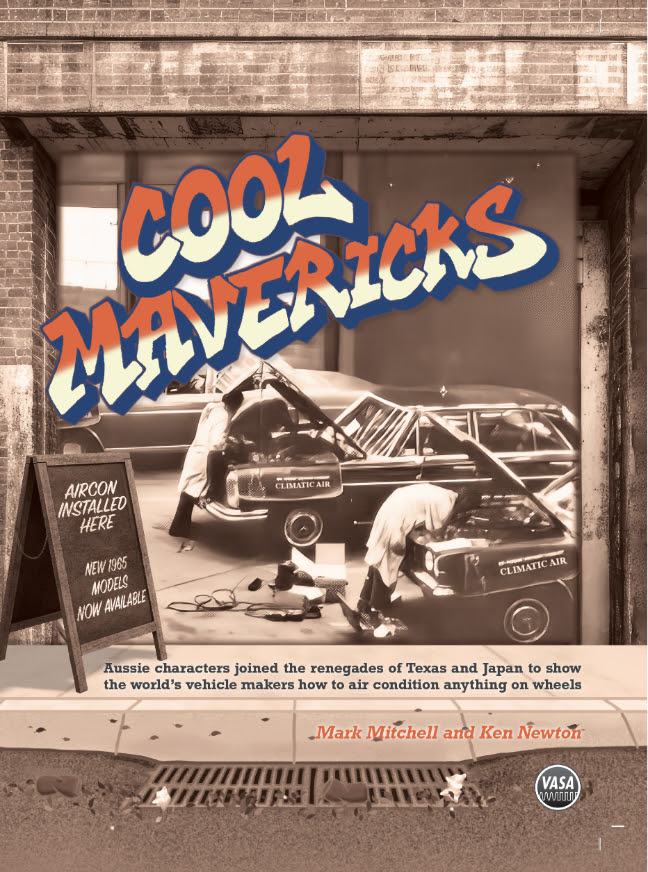
Author and editor Mark Mitchell and Ken Newton have supplied the following information about their new book
A branch of the automotive industry that has until now been ignored by historians – mobile, or car air conditioning – is the subject of a new coffee table book called ‘Cool Mavericks’.
It was written by two industry pioneers and sponsored by Australasia’s peak body for the industry, VASA, a non-profit organization representing technicians, professional service centers, suppliers and original equipment manufacturers.
The authors are Mark Mitchell, a pioneer air conditioning workshop owner who was instrumental in starting VASA in 1993 at a time when car air conditioning workshops were being blamed for the environmental damage to the earth’s atmosphere through release of ozone destroying and greenhouse gasses and Ken Newton, a former journalist whose Gold Coast public relations company was engaged to help launch and manage the new organization. Mitchell, as author, and Newton as editor, have produced two previous books, ‘Sultan of Slide’ and ‘Unicla and the Midnight Technician’.
Mitchell is now head of the SuperCool Group, a unique test facility and production empire at Ormeau, south of Brisbane for HVACR testing, validation and certification, compressor design and manufacture, training and education, temperature monitoring and remote management solutions for the cold chain and cold storage industry. Newton was VASA’s CEO for 20 years and through his newsletters and media work succeeded in elevating VASA to an effective training and lobbying body.
Cool Mavericks has been heralded as the most comprehensive and detailed full history of this global industry to date.
It concentrates on the colorful characters, who, fired with gold-rush zeal in America and Australia and also in Japan, worked out how to air condition every car ever made, leaving the top car makers out of the game for almost half a century.
The authors realized that the book would be incomplete without opening chapters exploring the work of the engineers and entrepreneurs in Detroit and Texas, and the relationships that developed between American inventors and manufacturers, and the Asian and Australian market which was a potential gold mine for the new and unplanned accessory of air conditioning.
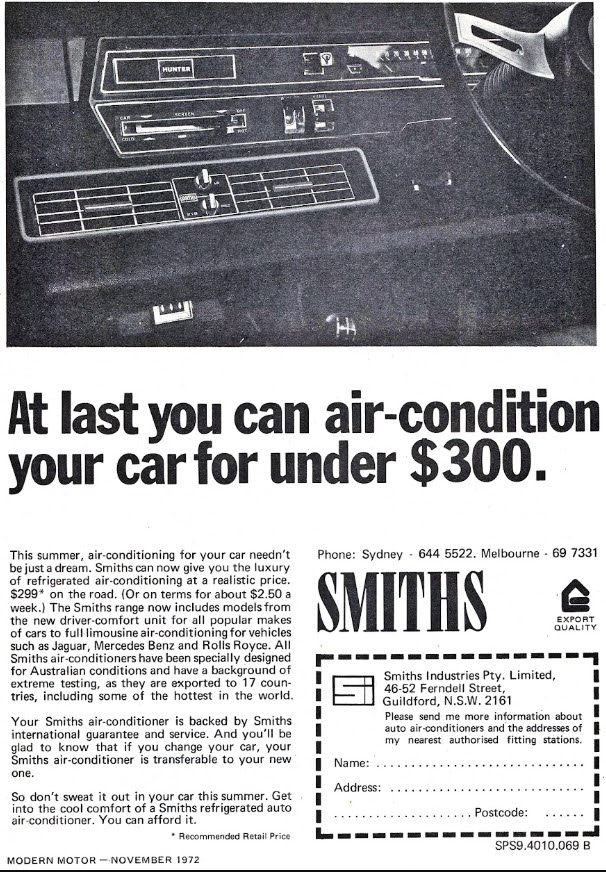
The buyers of the vast majority of air conditioned Australian cars from the 1960s to the 1990s had their aircon fitted, not by the new car dealership but by an independent, private installer around the corner. It wasn’t until almost the turn of the century that air conditioning became the default accessory in every vehicle on the assembly line. Large private aftermarket innovators emerged in Australia to design and make the systems used in the Australian-made and assembled cars. Many of the design standards and purpose-built machinery conceived by these companies are still being used by OEM suppliers today, but, like the car makers, most have left Australian shores.
In the hot states of America and Australia, it led to an exciting, innovative and lucrative period for those workshops that took a punt and started building and installing air conditioning in all kinds of mobile vehicles, including trains, tractors, boats and troop carriers.
Industry leaders say Cool Mavericks is the first attempt to give long-overdue credit to the real pioneers of mobile air conditioning, an unsung sector of the vehicle aftermarket who defied all the odds and fired up an industry that was never anticipated and so never planned. The air conditioning systems devised by these entrepreneurs became the blueprint for all future mobile air conditioning.
More than a hundred pioneers in air conditioning were interviewed globally for Cool Mavericks. The book exposes how mechanical tinkerers in often small, backyard workshops, took control of this opportunistic industry and dominated it throughout the second half of last century.

Current VASA president Brett Meads said the book would appeal to anyone with an interest in the Australian spirit of innovation, as well as automotive history.
While Australia’s pioneer role in mobile air conditioning development dominates the book, many of its pages are devoted to the early patents and vital discoveries that needed to be made before a cooling system based on refrigeration would ever work in a moving vehicle.
For example, the early refrigerants used in the first waves of stationary refrigeration in America were so toxic that if used in a vehicle, one leak and everyone in the car would die – and rigid lines used to carry refrigerants in the vehicles of the 1950s and 1960s didn’t last on poor road surfaces. The physical componentry of air conditioning had to be thought out and patented. Finally, somebody had to figure out how to stuff all this gear into a machine that was never designed to be mechanically air conditioned in the first place.
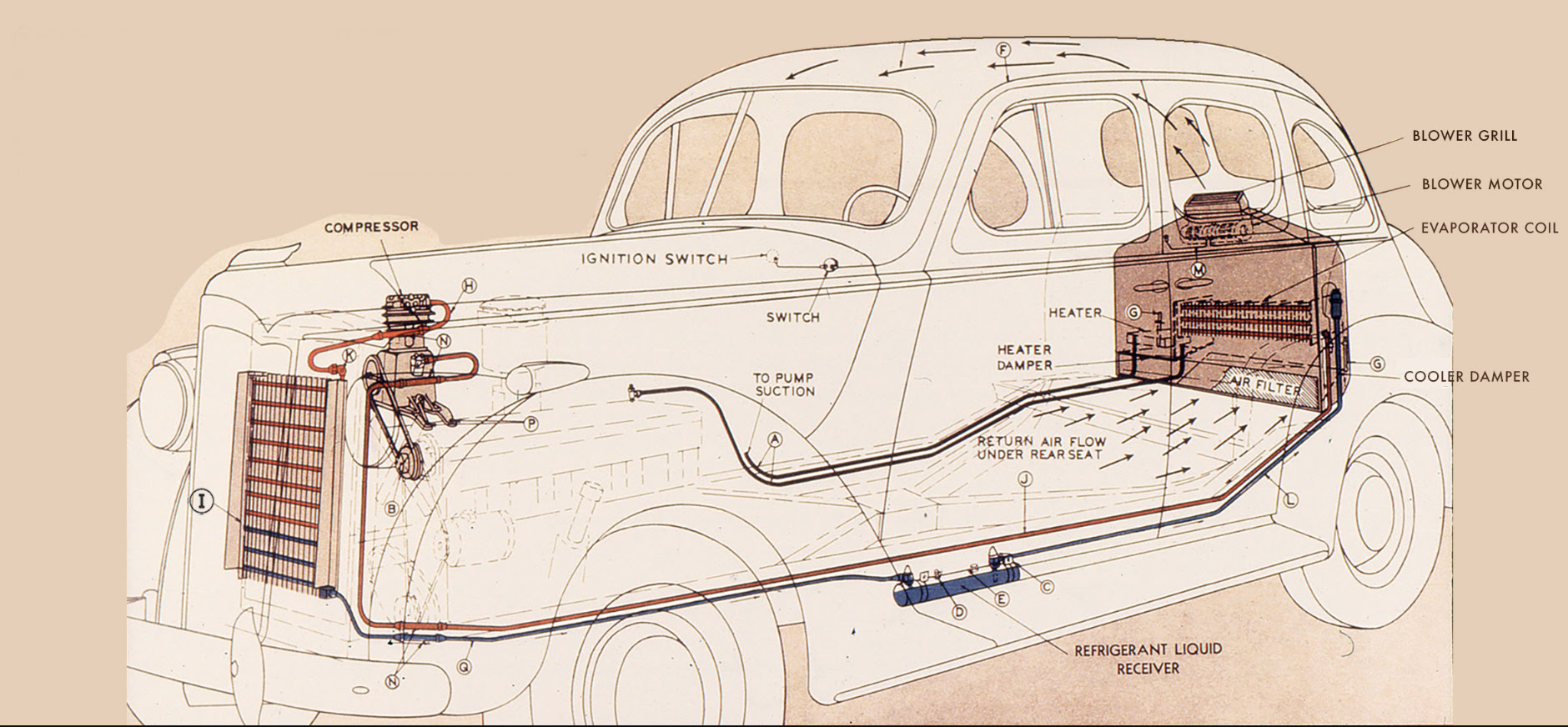
The car air conditioning industry in Australia was full of characters. There were larrikins, opportunists and true entrepreneurs, but all of them in their own way were explorers working with nothing more than an idea of how to cool the biggest variety of vehicles on the planet in one country, and most of them worked out of a tin shed.
Copies of the book and more information can be obtained at https://vasa.org.au/cool-