The Seventh Annual Michael R. Argetsinger Symposium on International Motor Racing History took place November 3rd & 4th at the Watkins Glen International Racetrack Media Center building in the track infield. The event is co-hosted by the International Motor Racing Research Center“> (IMRRC) and the SAH.
Symposium co-founder Don Capps returned as Master of Ceremonies for the event, which was streamed live and recorded for the second year in a row thanks to SAH and IMRRC member Eric Monterastelli of Grand Touring Motorsports.
There were 18 live presentations, four pre-recorded presentations, and a keynote address on Watkins Glen at 75 by former driver Rob Dyson.
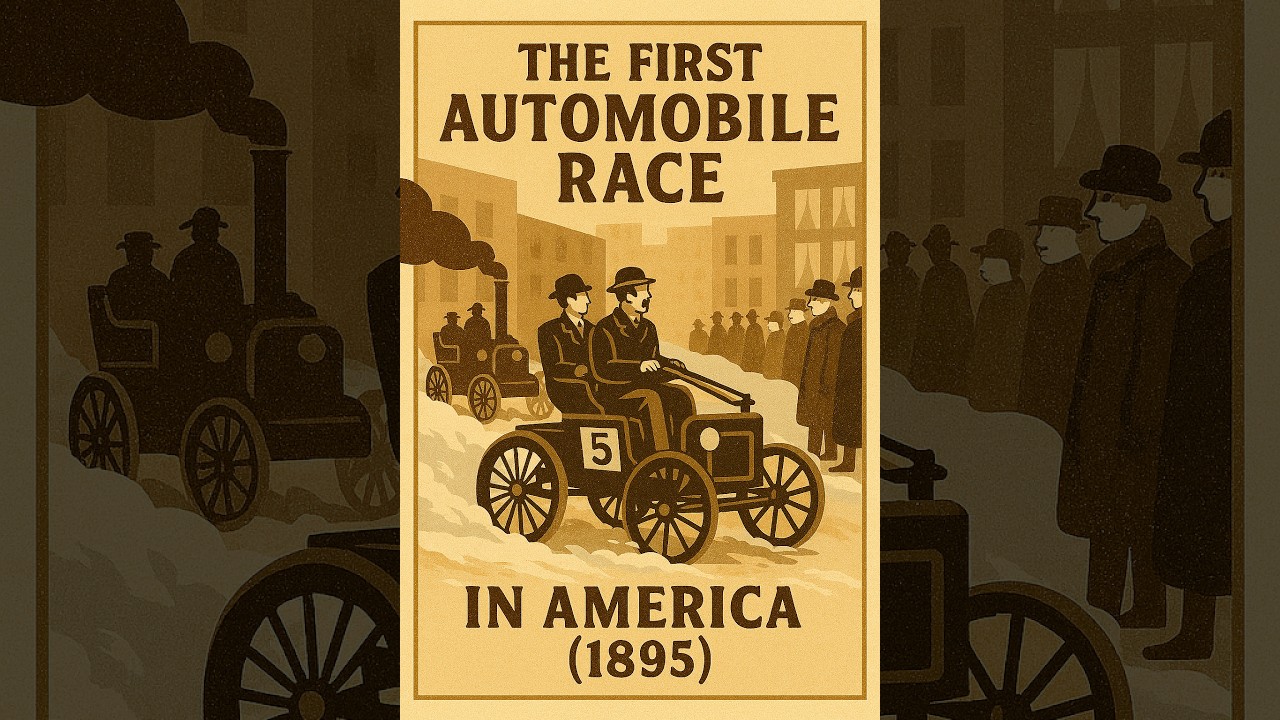
David Schmidt - The First Automobile Race in America (1895) - Symposium 2023
This presentation details the historical significance and background of the 1895 Horseless Carriage Contest held on Thanksgiving Day in Chicago, sponsored by the Chicago Times Herald. It is often considered ...the first automobile race in America. David Schmidt, a director at the Society of Automotive Historians, will discuss the event's what, why, when, where, and who, delving into the conditions, entries, and outcomes. The event featured 80 entries, only 6 of which started, and 3 managed to finish, albeit with rule violations. The contest led to awards for innovation and performance. Noteworthy figures included Hieronymus Mueller, Charles B. King, and the developers of an electric vehicle named the Electrobat. The race is also contextualized within the broader backdrop of the era's technological advancements and the burgeoning automotive industry.
Symposium 2023 was conducted in partnership with the IMRRC, and was filmed and distributed by the Motoring Podcast Network.Show More
David Schmidt - The First Automobile Race in America (1895) - Symposium 2023
This presentation details the historical significance and background ...
This presentation details the historical significance and background of the 1895 Horseless Carriage Contest held on Thanksgiving Day in Chicago, sponsored by the Chicago Times Herald. It is often considered ...the first automobile race in America. David Schmidt, a director at the Society of Automotive Historians, will discuss the event's what, why, when, where, and who, delving into the conditions, entries, and outcomes. The event featured 80 entries, only 6 of which started, and 3 managed to finish, albeit with rule violations. The contest led to awards for innovation and performance. Noteworthy figures included Hieronymus Mueller, Charles B. King, and the developers of an electric vehicle named the Electrobat. The race is also contextualized within the broader backdrop of the era's technological advancements and the burgeoning automotive industry.
Symposium 2023 was conducted in partnership with the IMRRC, and was filmed and distributed by the Motoring Podcast Network.Show More
Mario Tecce - Alfa Romeo's almost win at Watkins Glen F1 GP - Symposium 2023
Remembering Giacomelli and Alfa Romeo Almost Winning the Last United ...
Remembering Giacomelli and Alfa Romeo Almost Winning the Last United States Grand Prix at Watkins Glen
October 5, 1980, was a very important day at Watkins Glen International circuit. Historical ...research, including about motor racing, cannot be done with hypotheses or with “what ifs” but only with facts. However, it can indeed be conceived that the facts of that day affected many future things. This was going to be the last F1 GP at Watkins Glen. The starting grid had an unexpected pole sitter: the Alfa Romeo of Giacomelli. Those were the years of Ferrari, winner of 1979 championship, of Lotus, winning in 1978, while the age of Williams was just beginning. Alfa Romeo, although possessing ancient racing victories, was back in racing for less than 2 years. Giacomelli, an Italian driving a fully Italian car, started on the pole maintaining firmly his lead position. He kept the lead and seemed close to an extraordinary win. Suddenly, a minor electrical problem stopped him on the track and the Williams of Jones won the race. One wonders what would have been if Giacmelli had won. Perhaps Alfa Romeo’s racing efforts would not have been discontinued as happened and a second major Italian team would have stayed in Formula 1. Possibly a prestigious F1 win in the US, the major car market in the world, and eventual further successes could have improved the prospects of Alfa Romeo to remain an Italian state property and continue to progress as an independent firm.
Symposium 2023 was conducted in partnership with the IMRRC, and was filmed and distributed by the Motoring Podcast Network.Show More
Trevor Lister - Formula A - The SCCA’s Gift to the World - Symposium 2023
In the late 60’s New Zealand Motor Racing found itself in a bind. A ...
In the late 60’s New Zealand Motor Racing found itself in a bind. A few years earlier the Tasman Formula had been written to keep the local fleet of older ...2.5 litre ex F1 cars in play. But now the more modern Formula 2, and even a few of the National Formula 1600 cc cars, were embarrassing the older ones. Visiting cars from Europe were either bigger engined ex 1.5 litre F1 cars, or new designs for the upcoming 3 litre F1 with capacity reduced engines, leaving Motor Sport New Zealand with a dilemma. Whichever way you looked at it, it was going to be expensive.
The SCCA appears have come to the same conclusion, with a 1967 amendment to their Formula A allowing Stock Block engines. The gate was open for others to do the same. At the last SCCA race of 1968 SCCA teams were approached, by a New Zealand delegation, to demonstrate their cars in New Zealand. Four teams took up the challenge, and the Kiwi’s liked the look of it. Within the year Formula A was a main stream category with Championships for it unfolding in Europe, South Africa, and the Tasman Countries.
This Presentation looks at the nitty gritty of that first Kiwi Formula A race, as seen through the eyes of this presenter in 1968.
Symposium 2023 was conducted in partnership with the IMRRC, and was filmed and distributed by the Motoring Podcast Network.Show More
Skip McGoun - F1 Financial Support as Cultural Indicator - Symposium 2023
Elton G. “Skip” McGoun is an Emeritus Professor of Finance at Bucknell ...
Elton G. “Skip” McGoun is an Emeritus Professor of Finance at Bucknell University and a former visiting professor at the University of Donja Gorija in Montenegro. He has presented and ...published on both finance history and culture and automobile history and culture and served as area chair of the Vehicle Culture Section of the Popular Culture Association.
McGoun examines Formula One on-track and on-vehicle sponsorships through the post-WWII period to show the evolution of the cultural appeal of the series.
Symposium 2023 was conducted in partnership with the IMRRC, and was filmed and distributed by the Motoring Podcast Network.Show More
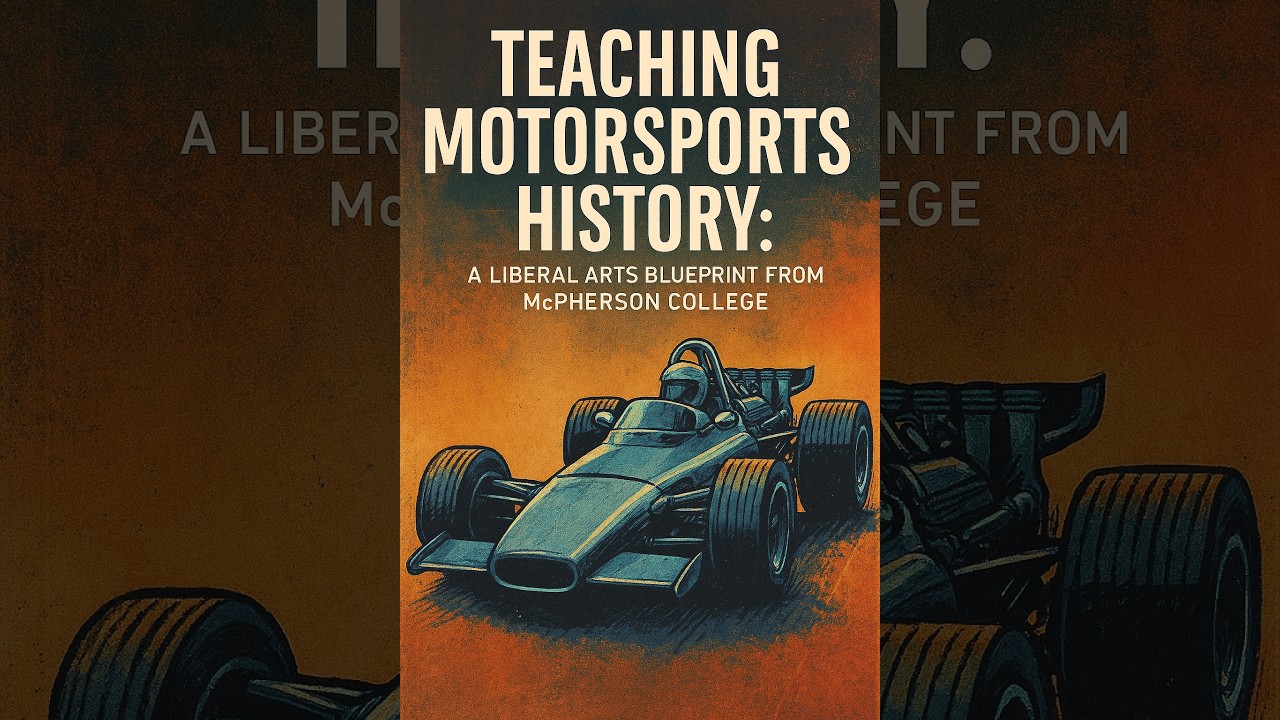
Teaching Motorsports History at McPherson College - Ken Yohn, Kristie Sojka - Symposium 2023
Ken Yohn is a social scientist keenly interested in how the automobile ...
Ken Yohn is a social scientist keenly interested in how the automobile shapes our lives. With a Ph.D. in political science and postdoctoral work in history and economics, Yohn has ...held faculty positions at universities in Japan, Germany, France, and Poland, including a sabbatical as scholar in residence at the University of Science and Technology in Lille, France. For the past 25 years Yohn has been teaching at McPherson College in Kansas, where he is currently chair of the history and politics department.
The Automotive Restoration Technology program at McPherson College was established in 1976, and since its inception the curriculum has included the study of the technical and social history of the automobile. Given this experience, Yohn addresses how McPherson might inform teaching the specialized field of motor racing. He will begin by giving an overview of the McPherson automotive history curriculum and conclusions about substantive content choices and best teaching practices. By examining the comparative scope of automotive history and motor racing history, Yohn will present areas of substantial overlap and differentiation. Finally, he will present suggestions for curriculum and teaching practices. Participants will be requested to share their reflections on the following question: What 3 key topics should every motor racing historian understand?
Cruising Through the Stacks: A Special Library Collection
Kristie Sojka earned her BA in History from Wichita State University and her MLIS from Kent State University. She has worked in a variety of roles in Kansas libraries for the past 13 years. Sojka is currently entering her third year as the director of library services at Miller Library McPherson College. Her responsibilities include providing library and research services, support, and instruction to the entire campus community. She also oversees the two special collections located within Miller Library: the Brethren and College Archives and the Paul Russell and Company Center for Automotive Research, which houses the special automotive materials collection. Sojka is currently serving as vice president of the College and University Libraries Section of the Kansas Library Association.
The Paul Russell and Company Center for Automotive Research housed within Miller Library at McPherson College currently holds over 5,000 automotive related titles. This presentation will consider the benefits and challenges of curating a special library collection and archives, which supports automotive restoration education. The presenter will discuss the types of materials currently available to researchers, the varying processes of obtaining materials, and options for organizing the collection.
From the Prints: A Student’s Perspective on Racing History Education
Jeremy Porter, from Seneca Falls, NY, is a senior studying automotive restoration technology at McPherson College in Kansas. First bitten by the car bug at the age of five after attending the Vintage Festival at Watkins Glen, he is fascinated by the mechanical aspects of vehicles and other machinery. He was a part of the team that restored the school’s 1953 Mercedes Benz 300S Cabriolet that finished second in class at Pebble Beach. His interests include vintage Ferraris, pre-war Bugattis and Alfas, open-wheel race cars, and the development of technologies within the drivetrain.
As a student of the Automotive Restoration program at McPherson College, a four-year degree that centers the skills needed for the preservation and/or restoration of the vehicle itself and its associated history, a younger generation is given the chance to take the torch. Hands-on skills such as engine rebuilding and general mechanical work are supplemented by a dive into proper research methods, archival building/handling, general history of automobiles and their artistic and technological designs, along with literature courses that help create a unique liberal arts education. Using an example of a current project involving the digitization and creation of an archive of original Duesenberg road car, racing car, and marine engine blueprints that are housed within the school’s library, this presentation will show how the curriculum at McPherson College culminates in a comprehensive educational experience.
Symposium 2023 was conducted in partnership with the IMRRC, and was filmed and distributed by the Motoring Podcast Network.Show More
From the Prints: A Student’s Perspective on Racing History Education - Symposium 2023
Jeremy Porter, from Seneca Falls, NY, is a senior studying automotive ...
Jeremy Porter, from Seneca Falls, NY, is a senior studying automotive restoration technology at McPherson College in Kansas. First bitten by the car bug at the age of five after ...attending the Vintage Festival at Watkins Glen, he is fascinated by the mechanical aspects of vehicles and other machinery. He was a part of the team that restored the school’s 1953 Mercedes Benz 300S Cabriolet that finished second in class at Pebble Beach. His interests include vintage Ferraris, pre-war Bugattis and Alfas, open-wheel race cars, and the development of technologies within the drivetrain.
As a student of the Automotive Restoration program at McPherson College, a four-year degree that centers the skills needed for the preservation and/or restoration of the vehicle itself and its associated history, a younger generation is given the chance to take the torch. Hands-on skills such as engine rebuilding and general mechanical work are supplemented by a dive into proper research methods, archival building/handling, general history of automobiles and their artistic and technological designs, along with literature courses that help create a unique liberal arts education. Using an example of a current project involving the digitization and creation of an archive of original Duesenberg road car, racing car, and marine engine blueprints that are housed within the school’s library, this presentation will show how the curriculum at McPherson College culminates in a comprehensive educational experience.
Symposium 2023 was conducted in partnership with the IMRRC, and was filmed and distributed by the Motoring Podcast Network.Show More
Don Capps - 1908 and American Motor Sport - Symposium 2023
Don Capps has been a member of the SAH Board of Directors since 2014 ...
Don Capps has been a member of the SAH Board of Directors since 2014 and is now the immediate past president of the Society. He is a member of the ...Historians Council of the IMRRC and is the co-chair of the Symposium. Capps began following motor sports at an early age while attending races with his father at Lakewood Speedway in Atlanta. In addition to motor racing, military and civil aviation and military history have also been lifelong interests that formed early on. Capps holds graduate degrees from the University of South Carolina and George Mason University and has taught history at both the high school and college levels, the latter being The Citadel. He was a faculty member of the Defense Model & Simulation University and spent over three years in Southwest Asia with the Program Executive
Office for Simulation Training and Instrumentation.
Don is currently engaged in research surrounding the sport and contests sanctioned by the AAA from its beginning, including the American national auto racing championships, until the Contest Board ceased operations at the end of the 1955 season.
Symposium 2023 was conducted in partnership with the IMRRC, and was filmed and distributed by the Motoring Podcast Network.Show More
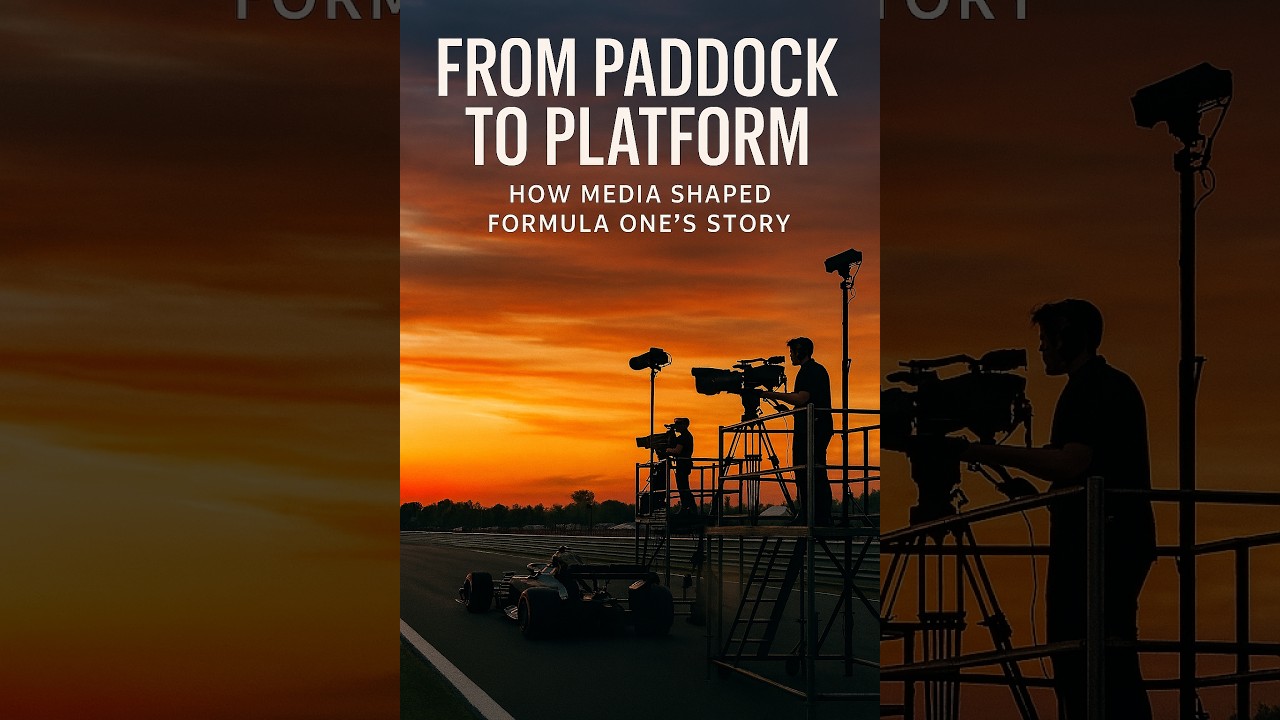
Richard Haynes - Transformations in Media Relations in F1 - Symposium 2023
Richard Haynes is professor of Media Sport in the Division of ...
Richard Haynes is professor of Media Sport in the Division of Communications, Media and Culture at the University of Stirling, Scotland. He is author of seven books on sport and ...communications including the award-winning history BBC Sport in Black and White (Palgrave 2016) and his forthcoming book with Raymond Boyle Streaming the Formula 1 Rivalry: Sport and the Media in the Platform Age to be published by Peter Lang in 2024.
Based on archival and biographical research and interviews with British journalists, broadcasters and communications managers, this presentation provides an analysis of the transformations in media relations in Formula One from 1960s onward. The paper explores the professional careers of leading British journalists and broadcasters of F1 to explore how media relations have changed over time. We conclude with some thoughts on how F1 in the era of Liberty Media, is bringing new opportunities for F1 across different platforms, transforming again the media relations of the sport.
Symposium 2023 was conducted in partnership with the IMRRC, and was filmed and distributed by the Motoring Podcast Network.Show More
Rob Dyson - A driver's reflections on Watkins Glen at 75 - Symposium 2023
Rob Dyson is a New York based businessman and retired professional ...
Rob Dyson is a New York based businessman and retired professional racing driver with a long association with Watkins Glen International and the International Motor Racing Research Center. Following completion ...of his licensing school at Watkins Glen in 1974, Dyson began competing in amateur SCCA competition. In 1981 he won the Sports Car Club of America’s GT2 national championship.
Dyson began racing professionally in IMSA GTO and the SCCA Trans-Am Series in 1982. The following year, to support his professional racing efforts, Dyson founded the Dyson Racing Team, which over the next few years grew to be one of America’s premier sports car racing teams. From it base in Poughkeepsie, over the course of nearly four decades the team won 19 championships, 72 race victories, started 72 times from the pole and achieved 224 podium finishes. Among the team’s notable accomplishments is a pair of overall victories in America’s premier endurance race, the Rolex 24, at Daytona International Speedway.
The team fielded cars during the heyday of the IMSA Camel GT, winning its first time out with a Porsche 962 at Lime Rock Park. Under Dyson’s leadership the team went on to successfully field entries in Indy car, the World Sports Car Championship, the United States Road Racing Championship, the American Le Mans Series (where the team scored two championships), the Rolex Sports Car Series, and the Pirelli World Challenge, where the team scored Bentley’s first-ever North American race victory.
During his 21 seasons as a professional racing driver Dyson drove in 92 races, scoring four overall race wins (including the 1997 Rolex 24 at Daytona) and a total of 18 podium finishes. Dyson continued to compete episodically in professional racing through 2007 and today remains active driving his collection of vintage Indy cars in a variety of demonstration events. Dyson’s personal historic Indy car collection ranges from a 1913 Isotta Fraschini tipo IM to Johnny Rutherford’s 1978 Budweiser McLaren M24B, and includes the 1961 Kimberly Cooper Climax, the first successful rear-engine car to compete in the 500.
Named chairman of the board of directors of the Indianapolis Motor Speedway Museum in 2021 following a decade as a member of the board, Dyson is guiding the institution through its $89 million transformational renovation as it charts its future path as the repository of the history and related artifacts of America’s oldest active and most storied racing facility.
In 2011 Dyson donated to the IMRRC the historic archives of National Speed Sport News, America’s premier motorsports news publication since the late 1930s.
Dyson is the chairman and chief executive officer of Dyson-Kissner-Moran Corporation, a privately-owned international holding company.
Symposium 2023 was conducted in partnership with the IMRRC, and was filmed and distributed by the Motoring Podcast Network.Show More
Alan Isselhard - Superstitions & Bizzare Events - Symposium 2023
Al Isselhard is a retired mechanical designer of test equipment for ...
Al Isselhard is a retired mechanical designer of test equipment for Eastman Kodak Co. and has enjoyed the automobile world in several capacities. He is a big supermodified race fan, ...collector of tired British sports cars, serious but non-professional race photographer, past crew member on a SCCA race team, race memorabilia and petrolania collector, retired road rallyist and a supporter of the IMRRC.
Superstitions, both good and evil, common and rare, affect all classes of people and their place in life and have been passed along generation after generation. Auto racing, from its very beginning, is not immune from superstitions - many of which can be described as bizarre and are present in today’s auto racing world.
Symposium 2023 was conducted in partnership with the IMRRC, and was filmed and distributed by the Motoring Podcast Network.Show More
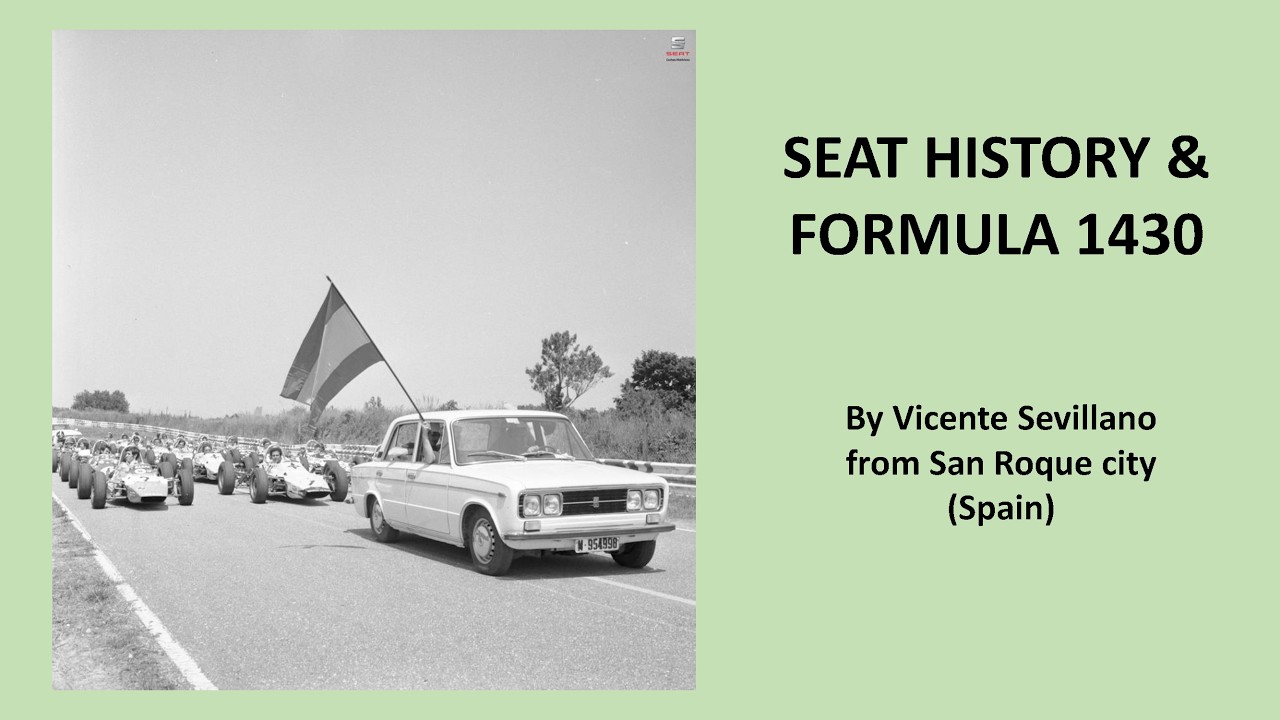
Vicente Sevillano - SEAT History & Formula 1430 - Symposium 2023
Vicente Sevillano, from San Roque city (Cádiz province - South of ...
Vicente Sevillano, from San Roque city (Cádiz province - South of Spain), holds a degree in law. He has been a world motoring heritage and motorsport enthusiast since his childhood ...and is a member of several classic car clubs in Spain, Gibraltar, Bosnia and the United States. Sevillano is a FIVA (International Federation of Antique Vehicles) Youth Group member and Youth Ambassador. He is also a member of FEVA (Spanish Federation of Antique Vehicles).
Mr. Sevillano’s presentation addresses the history of the Spanish automotive brand SEAT (Sociedad Española de Automóviles de Turismos, S.A.) founded in 1950. The SEAT brand is currently under Volkswagen Group. Vicente reviews SEAT’s most emblematic models in connection with the racing series “Formula 1430,” launched in 1971, whose name derives from the mechanics of the SEAT 1430 model.
Symposium 2023 was conducted in partnership with the IMRRC, and was filmed and distributed by the Motoring Podcast Network.Show More
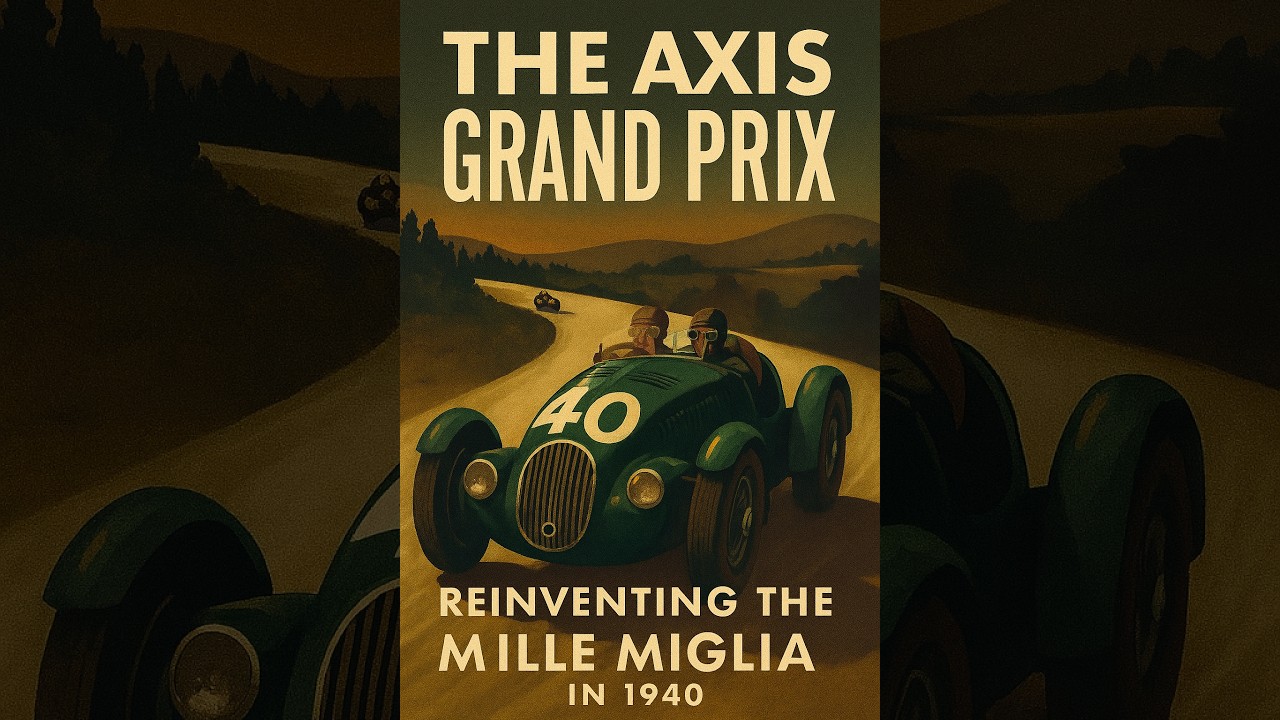
Paul Baxa - The reinvention of the Mille Miglia in 1940 - Symposium 2023
Paul Baxa is professor of history at Ave Maria University in Florida. ...
Paul Baxa is professor of history at Ave Maria University in Florida. Parts of his most recent book, Motorsport and Fascism: Living Dangerously (Palgrave Macmillan, 2022) have been presented at ...past Argetsinger Symposia. He was privileged to have presented at the first symposium in 2015.
The 1940 Mille Miglia is an anomaly in the long history of the race. The previous classic editions, held between 1927 and 1938, were run on the thousand-mile figure-of-eight open road course covering half of Italy. During that time, it had become Italy’s most important motor race and one that was exploited by Mussolini’s Fascist regime. After a major tragedy in 1938, the race was reinvented in 1940 and bore scant resemblance to the original. This paper examines how the race was used by the regime to exalt the Axis alliance while at the same time making great efforts to link it to its more illustrious preceding editions.
Symposium 2023 was conducted in partnership with the IMRRC, and was filmed and distributed by the Motoring Podcast Network.Show More
After watching a video, you can send questions for the presenter to the IMRRC. Your questions will forwarded to the presenter for replies.